August 17, 2026
Why Does Facebook Keep Rejecting or Restricting Your Med Spa Ads?

The Frustration Every Med Spa and Aesthetics Business Runs Into on Meta
You finally get the ad live. The offer is good, the creative looks clean, and then a few hours later you get the notification: disapproved. You edit a word or two, resubmit, and it happens again. Sometimes the ad runs for a day and then gets pulled. Sometimes your whole account gets a warning for reasons that feel vague at best.
If you run a med spa, IV therapy clinic, or medical weight loss practice, this probably sounds familiar. It is one of the most common frustrations we hear from aesthetics and wellness owners trying to advertise on Facebook and Instagram. You are not doing something wildly wrong, and you are not the only one this happens to. Meta's ad policies treat health and beauty advertising differently than almost any other category, and most business owners find that out the hard way, after money and time have already gone into a campaign.
This article is not about treatment claims, results, or what works clinically. It is about what Meta's ad review system is actually looking for, why aesthetics and healthcare-adjacent businesses get flagged more than most, and what you can change in your ads so they stop bouncing back.
Why Meta's Ad System Is Especially Strict on Health and Beauty Businesses
Meta reviews ads using a mix of automated systems and policy categories, and two of those categories, personal attributes and health, apply directly to nearly everything a med spa wants to advertise. The personal attributes policy restricts ads that suggest something about a person's physical condition, appearance, or health status, even indirectly. The health policy adds another layer of scrutiny on top of that for anything related to medical treatments, procedures, or body-related outcomes.
Put those two together and you can see why aesthetics businesses get caught more often than, say, a landscaping company or a retail shop. It is not that Meta has singled out your business. It is that the entire category, med spas, dermatology, weight loss, injectables, body contouring, sits right in the middle of the two most heavily policed areas of Meta's advertising rules.
It also helps to understand that the first layer of review is automated. A machine scans your ad copy, your image, and sometimes your landing page for known trigger words and visual patterns before a human ever looks at it. That system is designed to be cautious, which means it often flags ads that are perfectly reasonable just because they use language or imagery that resembles something restricted. This is a platform-wide reality for the entire health and beauty vertical, not a sign that your targeting, your business, or your account has done something unusual.
Common Reasons Med Spa Ads Get Flagged or Rejected
Most rejections in this industry come down to a handful of recurring issues. None of these are about whether a treatment works. They are about how the ad is worded and shown.
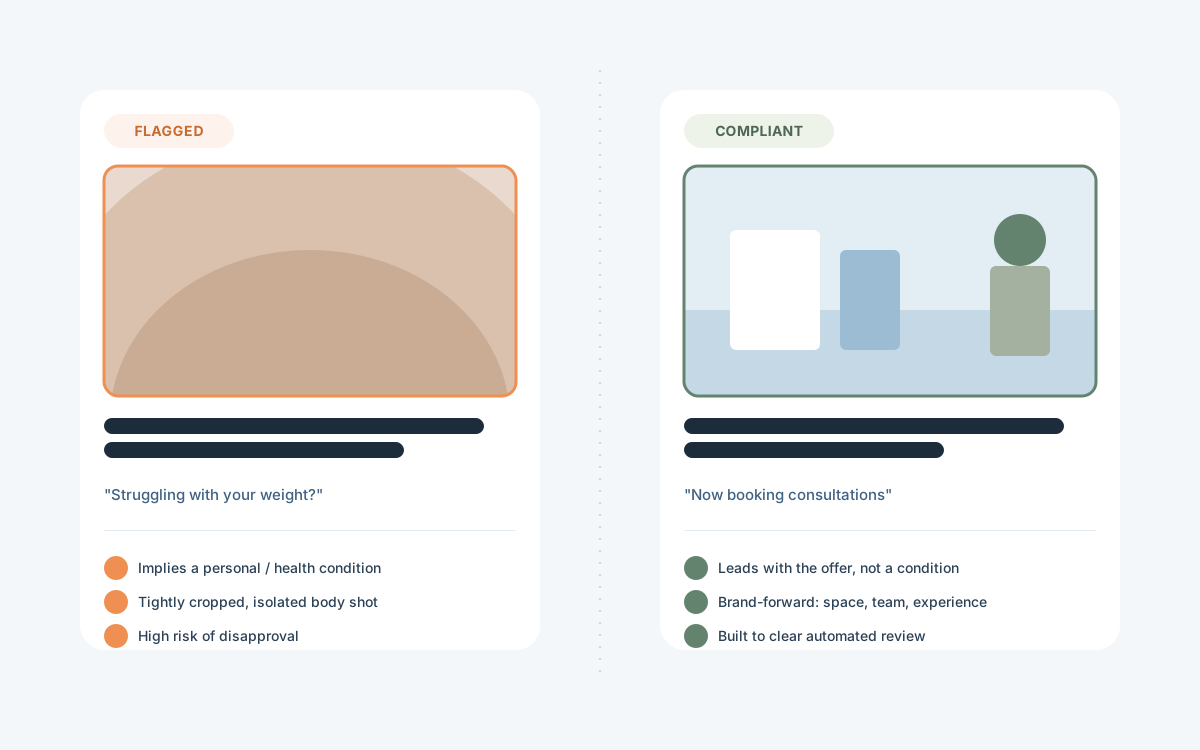
- Implying a health condition or personal attribute. Phrases like "Struggling with weight gain?" or "Tired of your wrinkles?" directly address the viewer as though the ad knows something personal about their body or health. Meta's personal attributes policy exists specifically to prevent ads from doing this, even when the tone feels harmless. Rewriting the same offer around the service itself, rather than the assumed problem, avoids this trigger entirely.
- Before-and-after imagery. This is one of the most consistent flags in the aesthetics space. Side-by-side transformation photos are frequently treated as a way of implying or exaggerating a health or body outcome, even when the results shown are real and modest.
- Exaggerated or definitive result claims. Language that promises a guaranteed or dramatic outcome, "melt fat instantly," "erase years off your face," "guaranteed results," gets flagged because it implies a medical outcome Meta cannot verify and does not allow advertisers to promise.
- Restricted terms tied to medical procedures or weight loss. Certain words associated with prescription treatments, injectables, or weight loss medications are treated as sensitive by default. Even referencing a treatment by its common name can trigger review if the surrounding copy reads like a medical claim rather than a service description.
- Imagery that isolates a body part. Close-up shots focused tightly on a stomach, thighs, or face in a way that centers on a "problem area" can be flagged as body-focused content, even without any text implying a condition. Meta's system reads visuals almost as literally as it reads copy.
Every one of these triggers is about ad policy and platform compliance, not about whether a treatment is effective or safe. Meta is not evaluating your services. It is evaluating whether your ad's words and images match patterns it has been trained to restrict.
What Happens After a Rejection: Restrictions, Disapprovals, and Account Risk
A single disapproved ad is usually not a big deal on its own. It means that one ad did not meet review standards, and in most cases you can edit it, resubmit it, or request a review. This happens to advertisers across every industry from time to time and does not automatically put your account at risk.
The bigger issue is what happens with repeated violations. Meta tracks policy violations at the account level, not just the ad level. If your account racks up multiple disapprovals, especially for the same type of issue, Meta can move from disapproving individual ads to restricting the account itself. That can mean losing the ability to run new ads, having your ad spend capped, or in more serious cases, having the account permanently restricted from advertising.
This is why it matters to understand the difference between an isolated mistake and a pattern. One rejected ad because of an unclear phrase is a quick fix. A string of rejections over weeks because the same body-focused imagery or condition-implying language keeps getting reused is what pushes an account toward real risk. For a med spa that depends on paid social to fill appointment slots, an account-level restriction is not a minor inconvenience. It can shut down your ability to advertise on the platform entirely while you sort it out.
How to Write and Design Med Spa Ads That Stay Compliant
The good news is that none of this means you cannot advertise a med spa on Meta successfully. It means the messaging and creative need to be built around the business and the experience, not around implied conditions or dramatic outcomes.
- Lead with the offer and the experience, not the assumed problem. Instead of addressing a perceived flaw or condition, describe what the visit is like, what the service includes, or what makes the practice worth booking with. "Now booking consultations for our newest injectable menu" reads very differently to Meta's system than "Tired of looking older than you feel?"
- Avoid targeting or copy that singles out a personal attribute. This applies to audience targeting as much as ad copy. Language and targeting choices that assume something about a viewer's body, weight, age-related appearance, or health status are the exact pattern the personal attributes policy is built to catch.
- Use lifestyle and brand-forward creative instead of body-focused shots. Video and photos of the space, the team, the process, and the overall feel of a visit tend to perform well and avoid the visual triggers tied to isolated body parts or before-and-after comparisons. This kind of creative also tends to build more trust with a local audience than a close-up transformation photo would anyway. You can see how we've approached content for healthcare and wellness clients for a sense of what that looks like in practice.
- Get appeals and edits right the first time. If an ad is disapproved, resist the urge to just tweak a word and resubmit the exact same structure. Look at what likely triggered the flag, whether it was a phrase, an image, or a combination, and change that specific element before requesting review. Repeated resubmissions of near-identical content are part of what escalates account-level scrutiny.
None of this requires softening your marketing into something vague. It means being specific about the business, the offer, and the experience, and letting that specificity do the work instead of leaning on language or imagery Meta is built to catch.
Why Ongoing Ad Management Matters More Than a One-Time Fix
It would be convenient if there were a single checklist you could run through once and never think about Meta's ad policies again. That is not how it works. Meta updates its enforcement patterns regularly, sometimes without much public notice, and creative that was fine six months ago can suddenly start getting flagged as the automated review system gets retrained. On top of that, even fully compliant ads lose effectiveness over time simply because audiences see the same creative too many times, which means new assets need to be produced on an ongoing basis anyway.
That combination, a moving policy target plus the natural need for fresh creative, is why compliance tends to work better as an ongoing part of ad management rather than something addressed once and forgotten. It takes someone paying attention to what is getting flagged across the account, what is starting to underperform, and what new creative needs to be filmed to keep both compliance and results on track.
This is the kind of hands-on management we focus on for med spa, aesthetics, and wellness clients across Athens and the surrounding Georgia communities we serve. We are not going to tell you we can guarantee an ad gets approved or that we control how Meta's algorithm behaves, because no agency honestly can. What we can do is bring a strategy-first approach to paid social ads and organic content, so campaigns are built around your business and your offer from the start, with compliance built in rather than something you find out about after a rejection notice.
Getting Started
If your med spa's ads keep getting disapproved or restricted, let's take a look at what's actually happening in your account and build a compliant strategy from the ground up. For more guidance for local healthcare and aesthetics businesses, check out the rest of our blog.
Book a free discovery call: Grab a time here — or call/text (404) 615-9946 if you'd rather just talk first.
Frequently Asked Questions
How long does a Meta ad review or appeal usually take?
Timelines vary and Meta does not publish a guaranteed turnaround. Straightforward automated reviews often resolve within a day, but an appeal that requires a human reviewer can take longer, especially if your account already has flags on it. If you rely on paid social to fill appointment slots, it is worth building a buffer into your launch timeline rather than assuming same-day approval.
Can I ask Meta why a specific ad was rejected?
Meta gives a general policy category when it disapproves an ad, but it rarely explains the exact word, phrase, or image that triggered it. You are usually left to compare the disapproval reason against your copy and creative and make an educated guess about what to change before requesting review.
Does running compliant ads guarantee my account will not get restricted?
No. Following the practices in this article lowers the risk of tripping Meta's automated review, but no advertiser or agency can guarantee approval or control how Meta's enforcement system behaves, since Meta updates its policies and detection patterns on its own schedule.
Is it still possible to advertise weight loss or injectable services at all on Meta?
Yes, but the ad has to be framed around the service, the offer, or the experience rather than around an implied condition or promised outcome. Many med spas run ongoing campaigns for these services successfully once the messaging and imagery are adjusted to fit Meta's personal attributes and health policies.
Keep reading
What to Look for When Hiring a Social Media Agency for Your Physical Therapy or Podiatry Practice
A practical guide for physical therapy and podiatry practice owners on what to actually look for when hiring a social media agency — beyond pretty posts.
The 3 Questions to Ask Before You Post: A Simple Framework for Small Business Content
Not sure what to think about before posting on social media for your business? Use this simple 3-question framework to plan content with real purpose.