August 18, 2026
Podiatry Practice Marketing: Reaching Patients Beyond Referrals
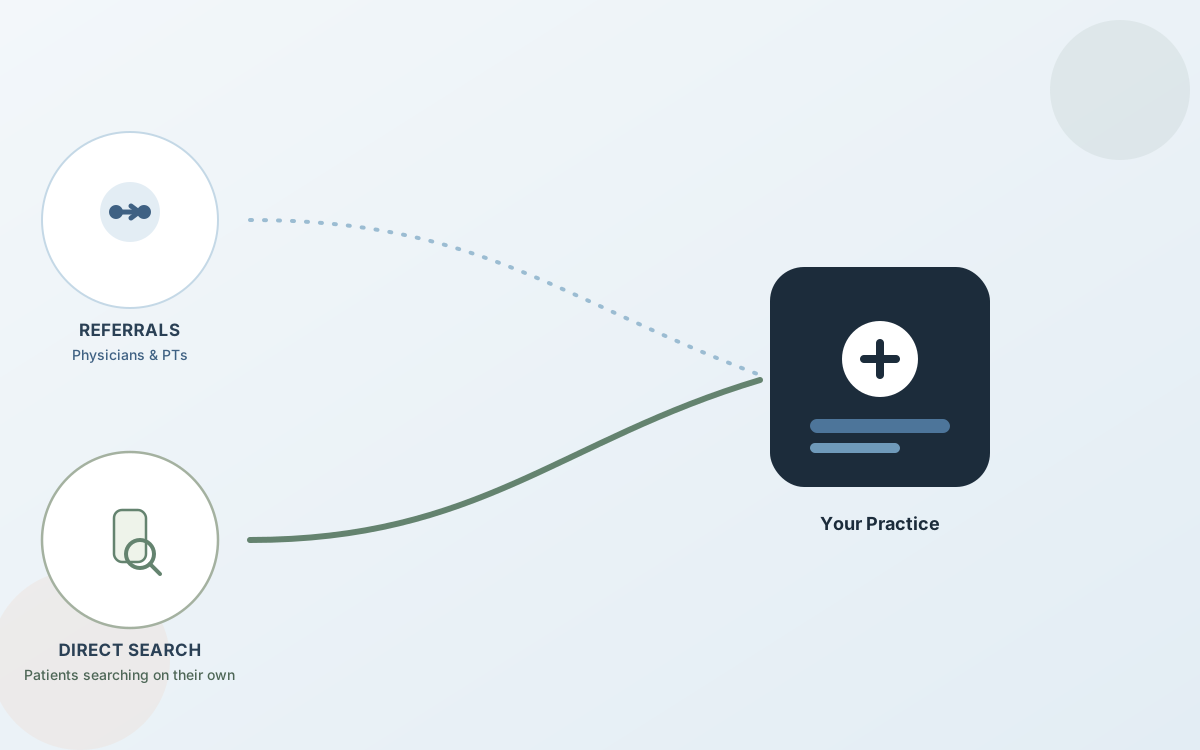
Why Referrals Alone Aren't Enough for Podiatry Growth
Most podiatry practices grow the same way they always have: a primary care doctor, an orthopedic surgeon, or a physical therapist sends a patient over, and that patient books an appointment. It works, and it's built real practices for years. But it also means your growth is tied to decisions happening outside your office. A referring physician retires. A hospital system changes its preferred network. A practice down the road starts getting the referrals that used to come to you. None of that has anything to do with the quality of care you provide, yet it can quietly shrink your new patient numbers.
Referral relationships also tend to skew toward certain types of cases, often the more clinical, insurance-covered visits. Patients who are looking into elective procedures, orthotics, or general foot and ankle care on their own initiative rarely start that search with a phone call to a referring doctor. They start it the way most people start anything now: on their phone, searching or scrolling.
This isn't an argument against referrals. They're still one of the most reliable sources of new patients a podiatry practice will ever have, and nothing here is meant to replace them. The point is that referrals fill one part of the funnel and leave another part completely empty: the patients who would choose your practice directly, if they knew you existed and trusted what they saw. For practices serving Athens, Watkinsville, and Jefferson, that gap matters more than it might in a bigger metro market. These are communities where people still want to feel like they know who they're trusting with their care, and a practice that shows up consistently online has a real edge over one that's only visible through a referral pad.
How Patients Actually Search for a Podiatrist Today
Even patients who eventually get referred to a podiatrist will look the practice up before booking. That's not a maybe, it's close to universal at this point. They'll search the practice name, check the website, read a handful of reviews, and often peek at the practice's Instagram or Facebook page to get a feel for who they'll actually be dealing with.
For patients who are choosing a podiatrist on their own, without a referral pushing them toward a specific name, the research goes further. Someone dealing with heel pain, an ingrown toenail, or a bunion they've been ignoring for months will typically search something general like "podiatrist near me" or "foot doctor in Athens GA," then start comparing options. They're looking at:
- Google reviews and star ratings
- Whether the practice has recent, active social media, or whether the last post was over a year ago
- Educational content that helps them understand what they might be dealing with before they ever sit in an exam room
- Photos and videos that show the office, the staff, and what a visit might actually feel like
This is especially true for procedures that are elective or cash-pay, where the patient is essentially shopping the way they would for any other significant purchase. They want to feel informed and comfortable before they commit, not just referred and scheduled.
A referral-only practice misses almost all of this. There's no educational content answering the questions a prospective patient is typing into Google at 9pm. There's no social presence showing that real people work there and actually enjoy it. There's no trail of trust for someone to follow before they ever pick up the phone. That's the gap direct-to-patient marketing is built to close, and it's a gap that costs practices real patients every month, whether they realize it or not.
Social Media Marketing Ideas for Podiatry Practices
Podiatry has a natural advantage on social media that a lot of other specialties don't: feet are visual, common conditions are relatable, and most people have a foot question they've never bothered to ask a doctor. That gives a practice plenty to work with, without ever needing to make specific treatment claims or promise outcomes.
- Patient education, kept general. Short videos or posts explaining what plantar fasciitis is, why ingrown toenails happen, or what causes bunions give people useful information and, just as importantly, show that your practice knows how to communicate clearly. The goal isn't to promise a fix. It's to help someone understand their own body a little better and see your practice as the place that would know what to do about it.
- Behind-the-scenes content. A quick look at how an exam room is set up, what a typical day looks like, or how the front desk handles scheduling humanizes a practice that most patients only ever think about when something hurts. It also reduces anxiety. A lot of people are more nervous about visiting a foot doctor than they'd admit, and seeing the space ahead of time takes some of that edge off.
- Staff introductions. Patients want to know who they're going to see. A short video introducing the podiatrist, the medical assistants, or the front office team does more to build comfort than any polished stock photo ever could. This is especially valuable for practices with multiple providers, where a patient might otherwise have no idea who they're being scheduled with.
- Office culture content. Team lunches, holiday decorations, a birthday shoutout, none of this needs to be deep or clinical. It signals that the practice is a real place with real people, which matters more than it sounds like it should when someone is choosing where to bring their care.
- Community involvement. Sponsoring a local 5K, showing up at a school event, or participating in a health fair in Athens or the surrounding towns gives a practice something to post about that also reinforces local roots.
None of this requires viral trends or constant reinvention. It requires a plan: knowing who each piece of content is for, what it's trying to say, and posting it consistently enough that it actually builds familiarity over time. That's the organic content approach behind the work Assure Creative does for its healthcare clients: steady, purposeful content that builds trust before anyone ever asks for the sale.
Building Local Trust and Visibility in Athens, Watkinsville, and Jefferson
A podiatry practice doesn't serve a national audience. It serves a defined radius of people who are choosing between a handful of realistic options, often based on which name feels the most familiar. That changes what "visibility" should actually mean for a practice in this position.
Local SEO basics matter here more than most practices realize. A complete, accurate Google Business Profile with current hours, photos, and a steady stream of reviews does a lot of the early legwork before a patient ever reaches your website. Consistent name, address, and phone information across directories helps too, small details, but ones that add up when someone is deciding whether to trust a search result.

Beyond the technical side, there's a relationship-building side that's easy to overlook. Showing up at community events, partnering with local gyms or running clubs (a natural fit for a podiatry practice), or simply being a recognizable presence at things happening in Athens, Watkinsville, or Jefferson does something a national ad campaign never could: it makes the practice feel like it belongs to the community it serves. Patients in smaller and mid-sized markets tend to notice and remember that.
Content that reflects this local identity, posts that mention specific neighborhoods, local partnerships, or community events, gives search engines and patients alike a clear signal that this is a practice rooted in the area, not a faceless clinic that could be anywhere. For a business with a defined service radius rather than a broad national draw, that local specificity is a genuine advantage, not a limitation.
When Paid Social Ads Make Sense for a Podiatry Practice
Organic content and local trust-building do the foundational work, but they have a ceiling. Social platforms don't show every post to every follower, and a great piece of content can still go unseen by most of the people who'd actually benefit from it. That's where paid social advertising comes in, not as a replacement for organic content, but as a way to extend its reach once there's something worth putting a budget behind.
Meta ads let a practice put content in front of people in a specific area who fit a general profile, rather than hoping the algorithm shows a post to the right person at the right time. For a podiatry practice, that might mean reaching people in Athens, Watkinsville, and Jefferson who are the right age or life stage to be dealing with common foot and ankle issues, or retargeting people who've already visited the practice's website or engaged with its content.
It's worth being clear about what paid ads can and can't promise. They can extend the reach of good content and put a practice in front of more of the right local audience. They can't guarantee a specific number of new patients, a certain return on ad spend, or predictable results from any single campaign, and any practice considering paid ads should be wary of anyone who promises otherwise. What ads do well is amplify a foundation that already works. If the organic content and reputation aren't there yet, paid ads are just spending money to put an unfinished pitch in front of more people.
The right time to start is generally once a practice has some consistent organic content, a decent base of reviews, and a clear sense of what it wants a prospective patient to feel or do after seeing an ad. At that point, paid social becomes a genuine growth lever rather than a shot in the dark.
Turning Marketing Into a Consistent System, Not a One-Off Push
The practices that actually see a shift in where their new patients come from aren't the ones that post for two weeks, run a single ad campaign, and then disappear for three months. They're the ones treating marketing as an ongoing system: content planned and posted on a regular schedule, a local reputation being built deliberately rather than left to chance, and ad campaigns managed and adjusted over time instead of launched once and forgotten.
That consistency is what actually moves the needle. A single educational post about plantar fasciitis won't change much on its own. A steady rhythm of that kind of content, month after month, alongside staff introductions, community involvement, and a well-managed ad presence, is what slowly builds the kind of local trust that turns into a full appointment book.
For a podiatry practice already busy running a clinic and seeing patients, building and maintaining that system alongside everything else is a real challenge, which is exactly why so many practices let referrals carry the whole load in the first place. But referrals were never meant to be the entire strategy. They're one piece of a bigger picture that also includes the patients actively searching, comparing, and deciding, right now, in Athens, Watkinsville, Jefferson, and the towns around them, without ever picking up the phone to ask a doctor for a recommendation.
For more social media guidance for local healthcare practices, check out the rest of our blog.
Book a free discovery call: Grab a time here — or call/text (404) 615-9946 if you'd rather just talk first.
Frequently Asked Questions
How much does it cost to market a podiatry practice with social media and ads?
It depends on the scope, whether you're starting with organic content only or adding paid ads on top, and how much ground there is to cover in your market. The best way to get a real number for your practice is to talk through your goals on a discovery call rather than guess based on a generic rate.
How long does it take to see results from podiatry practice marketing?
There's no set timeline, and anyone who promises a specific number of new patients or a guaranteed return is overpromising. What tends to happen is that consistent organic content builds familiarity and trust over months, and paid ads can extend that reach once the foundation is in place, but the pace varies by practice and market.
Do we need paid ads, or is organic social media enough on its own?
Organic content does the foundational trust-building work, but it has a ceiling since platforms don't show every post to every follower. Many practices start with organic content and reputation-building first, then add paid ads once there's something proven worth putting a budget behind.
Who should be the face of our practice's social media, the podiatrist or the staff?
There's no single right answer. Some practices lean on the podiatrist as the primary face, while others rotate in staff introductions, front desk team, and office culture content. A mix generally works well because it shows patients the full team they might interact with, not just the provider.
Can we still do social media marketing if our practice mostly sees insurance-covered, non-elective patients?
Yes. While elective and cash-pay patients tend to research more heavily before booking, insurance-covered patients still look up a practice's reviews and online presence before their first visit, even when a referral sent them there. The content ideas apply either way, just with less emphasis on the cash-pay comparison shopping angle.
Keep reading
Why Does Facebook Keep Rejecting or Restricting Your Med Spa Ads?
Med spa and aesthetics ads keep getting rejected or restricted on Meta? Here's why it happens and what to change in your ad strategy to stay compliant.
What to Look for When Hiring a Social Media Agency for Your Physical Therapy or Podiatry Practice
A practical guide for physical therapy and podiatry practice owners on what to actually look for when hiring a social media agency — beyond pretty posts.